

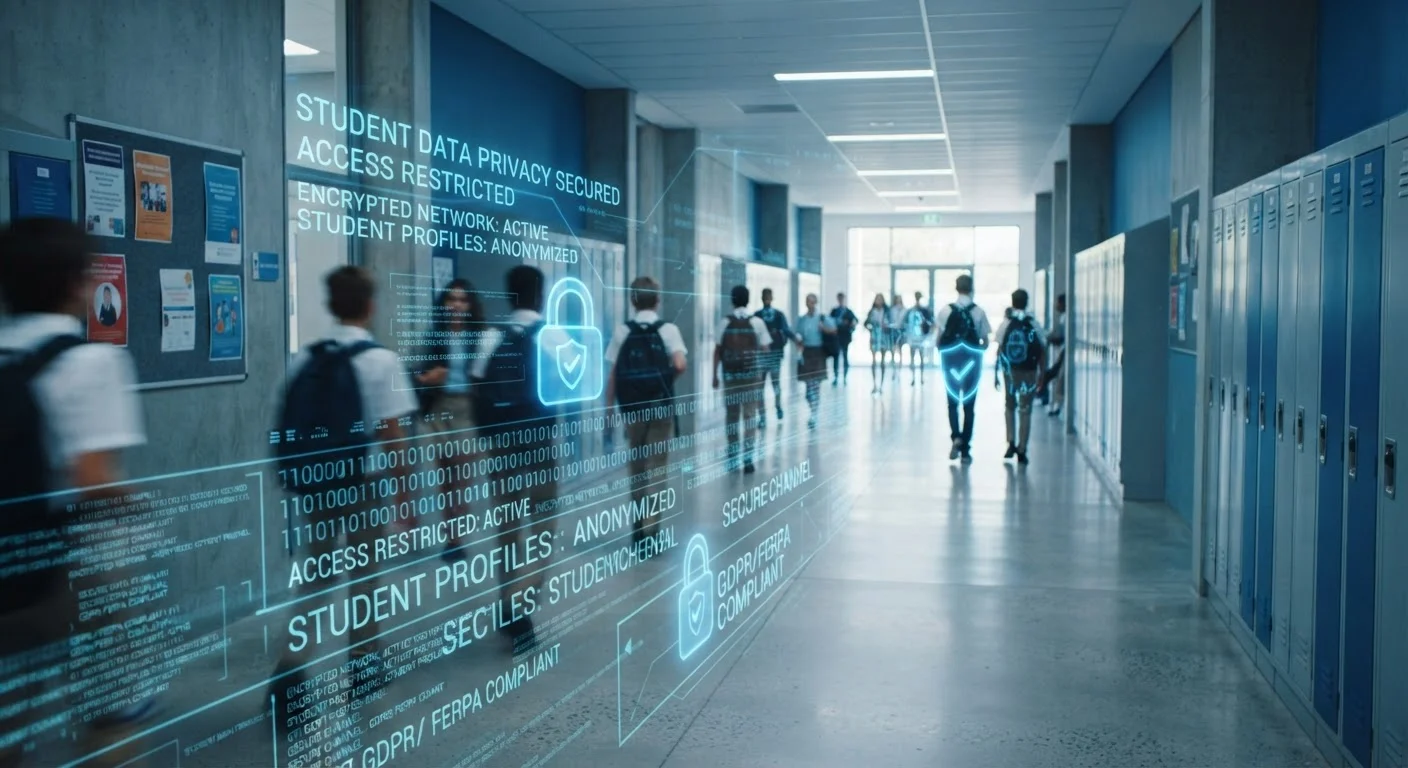
What Data Schools Actually Collect
From the moment a child enrolls, schools begin assembling a detailed record. Academic transcripts, attendance logs, disciplinary actions, and standardized test scores are the most familiar categories. But the full picture is broader.
Many schools also collect health and immunization records, special education evaluations and Individualized Education Programs (IEPs), free-and-reduced lunch eligibility data, demographic information, and — increasingly — digital activity from school-issued devices and learning management platforms. Ed-tech tools used for reading programs, online assessments, or virtual tutoring can generate detailed behavioral and performance data that never appears on a traditional report card.
It is worth noting that the scope of data collection can differ significantly between districts, as local policies, technology budgets, and state laws all shape what is gathered and retained.
40+
States with student data privacy laws
As of recent legislative sessions, more than 40 U.S. states have enacted laws addressing student data privacy beyond the federal FERPA baseline, according to the Education Commission of the States.
1,300+
Ed-tech apps used in a typical U.S. school district
A 2023 analysis by LearnPlatform estimated that the average U.S. school district used over 1,300 distinct ed-tech tools, raising significant questions about consistent data oversight.
45 days
Maximum response time for records requests under FERPA
Federal law requires schools to fulfill a parent's request to inspect education records within 45 days; many districts respond faster, but families should be aware of their legal timeline.
The Federal Framework: FERPA, COPPA, and Beyond
The cornerstone of U.S. student data privacy law is FERPA, which grants parents the right to inspect, review, and request amendments to their child's education records. Schools must generally obtain written consent before disclosing records to outside parties, with several important exceptions.
Those exceptions include disclosures to school officials with a legitimate educational interest, transfers to a new school, compliance with a court order, and sharing in health or safety emergencies. A frequently misunderstood provision allows schools to release directory information — name, photo, grade level, and similar details — without consent, unless a family has formally opted out.
For younger children, the Children's Online Privacy Protection Act (COPPA) restricts how online services can collect data from children under 13, which affects many ed-tech tools used in elementary classrooms. Schools acting as intermediaries must ensure vendors comply.
FERPA Rights Transfer at Age 18
Once a student turns 18 or begins attending a postsecondary institution, FERPA rights shift from the parent to the student. This is a common source of confusion — college students control their own academic records, and parents may not access them without the student's written consent. Many families are caught off guard by this transition when a child starts college.
For a broader look at how personal data flows and who profits from it, the data broker industry overview offers useful context on the commercial ecosystem surrounding personal information.
Third-Party Vendors and Ed-Tech Platforms
Modern classrooms rely heavily on outside technology providers. Reading apps, video platforms, assessment tools, and learning management systems are often built and maintained by private companies. Under FERPA, these vendors can receive student data only when they are functioning as a "school official" — meaning the school has outsourced a task it would otherwise handle itself, and the vendor operates under direct control and is prohibited from using data for commercial purposes.
In practice, oversight can be inconsistent. A 2023 report from the nonprofit Center for Democracy and Technology found that many school app ecosystems lack adequate contract review processes — meaning schools may not always verify how vendor data policies align with legal requirements. Parents and educators concerned about digital privacy practices can request a list of vendors their district contracts with and review the associated data-sharing agreements.
Understanding these risks connects to broader questions about digital privacy. The introduction to online privacy is a useful starting point for families less familiar with how personal data moves across the internet.
What Families Can Do
Parents and guardians have more leverage than they may realize. Under FERPA, they can formally request to review all education records the school holds on their child. If an error is found, they can request a correction. If the school disagrees, families are entitled to a hearing.
Opting out of directory information sharing is a concrete step many families overlook. It requires submitting a written request — typically at the start of a school year — to the principal or district office. Without that opt-out, the school may release basic identifying details to yearbook publishers, parent organizations, or even military recruiters (for high schoolers, under the No Child Left Behind era provisions).
Ask Your District for a Vendor List
Most school districts are willing to share a list of the third-party technology vendors they contract with, along with the associated data-sharing agreements. Requesting this list — usually through the district's privacy officer or superintendent's office — is a practical first step for families who want to understand what platforms handle their child's information. You can also ask whether each vendor agreement explicitly prohibits commercial use of student data.
State laws often extend protections beyond FERPA. California's Student Online Personal Information Protection Act (SOPIPA), for example, prohibits ed-tech companies from using student data for targeted advertising. Families are encouraged to look up what their state provides in addition to the federal baseline.
For students with disabilities, records related to special education services carry additional legal weight. Special education rights families may not know about offers a detailed breakdown of those protections.
Frequently Asked Questions
FERPA — the Family Educational Rights and Privacy Act — is a federal law that protects the privacy of student education records. It applies to virtually all public schools and most private colleges and universities that receive federal funding, covering the vast majority of U.S. students.
Yes, under specific conditions. Schools may share student data with third-party vendors — such as ed-tech software providers — if those vendors are designated as 'school officials' with a legitimate educational interest and agree to strict data-use restrictions. Sharing beyond that typically requires parental consent.
Directory information includes items like a student's name, address, phone number, photo, and grade level. Schools can disclose this without consent, but they must notify families annually and allow them to opt out. Contact your school office or district website to find the opt-out process.
Yes. Under FERPA, parents of students under 18 have the right to inspect and review their child's education records within 45 days of making a formal request. Once a student turns 18, those rights transfer to the student.
Yes. Records related to special education services fall under both FERPA and IDEA (the Individuals with Disabilities Education Act), which adds additional safeguards around how records are maintained and shared. <a href="/education/education-news/special-education-rights-most-families-dont-realise-they-have">Learn more about special education rights</a> that families may not be aware of.
You can file a complaint with the U.S. Department of Education's Family Policy Compliance Office, which enforces FERPA. Start by contacting your school or district to request clarification on the disclosure; many issues can be resolved at the local level first.
The content on this site is for informational purposes only and is not a substitute for professional advice. Always consult a qualified professional for guidance specific to your situation.